This is default featured slide 1 title

Go to Blogger edit html and find these sentences.Now replace these sentences with your own descriptions..

This is default featured slide 2 title

Go to Blogger edit html and find these sentences.Now replace these sentences with your own descriptions..

This is default featured slide 3 title

Go to Blogger edit html and find these sentences.Now replace these sentences with your own descriptions..

This is default featured slide 4 title

Go to Blogger edit html and find these sentences.Now replace these sentences with your own descriptions..

This is default featured slide 5 title

Go to Blogger edit html and find these sentences.Now replace these sentences with your own descriptions..

Showing posts with label Motorola's. Show all posts

Tuesday, June 21, 2011

Motorola Droid 3 Pops up in GLBenchmark-A VerizonXT883 with OMAP4

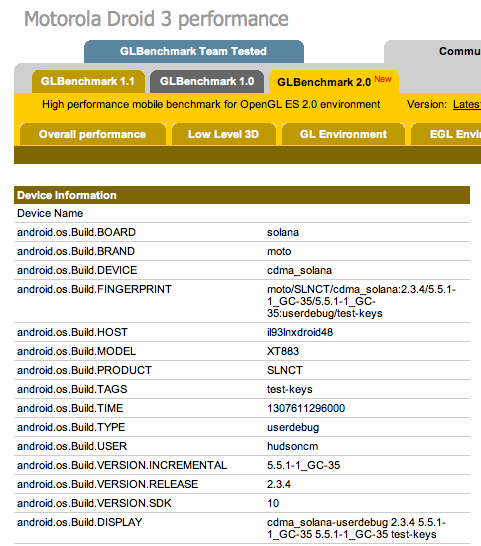
A tipster dropped a link our way early this morning to a GLBenchmark 2.0 results browser page that might be of interest to many. Hit that page and you'll find a complete run of the current GLBenchmark 2.0 suite, and a bit of a confirmation about what is and isn't the upcoming Motorola Droid 3. It isn't Tegra 2, it's OMAP 4430.

First off, the hardware specifications that we can glean from the information page seem to make it a virtually identical match with the specs of the Motorola Milestone 3, or XT883. That means a qHD 960x540 display likely 4" in size, hardware five-row QWERTY keyboard, Android 2.3.4, a possible 1 GB of LPDDR2 (512 MB is the other less-desirable, rumored number), 8 MP rear camera, front camera, and of course an accompanying CDMA2000 baseband for Verizon.


Given the number of recent flagship Motorola product launches with Tegra 2 SoCs, starting with the Motorola Atrix, the Droid X2, and the now-delayed Droid Bionic it seemed that a flagship (read: QWERTY keyboard-packing) summer Motorola Droid launch with Tegra 2 was inevitable. From the results page, it now seems that the Motorola Droid 3 will include a 1GHz OMAP 4430 SoC with PowerVR SGX 540 graphics, and not a Tegra 2.

The model in the results browser is codenamed "Solana" which matches the codename we've heard about for the Verizon-bound Motorola Droid 3. The photos below are of the XT883 which the Motorola Droid 3 will undoubtedly bear an uncanny resemblance to.


Motorola Milestone 3 - XT883 for China (courtesy: Motorola Mobility)

The benchmarks themselves paint an interesting picture, and while we're at it I've tossed in some other devices we have in-hand but haven't finished our full reviews of yet for comparison with these results from the Motorola Droid 3. Again GLBenchmark 2.0 runs we're reporting here are at native resolution for the respective devices, which we've now included in the description line for comparison. For a quick refresher, WVGA is 800x480, FWVGA is 854x480, and qHD is 960x540. 

GLBenchmark 2.0 - Egypt
GLBenchmark 2.0 - PRO

I've highlighted the previous Motorola Droid 2 results (which we reviewed last year) just for fun to illustrate how far we've come in one calendar year.

Monday, April 18, 2011

Android 3.0 Competited Motorola's iPad-Rival Xoom


Google's flagship Android 3.0 Honeycomb competitor to Apple's iPad appears to have failed at launch, with Motorola Xoom sales estimated by Deutsche Bank to have reached just 100,000 units, a figure far lower than initial projections of failure from Morgan Stanley and RBC.

The Xoom has been hampered by a high initial price, low build quality, hardware features that were missing or nonfunctional, operating system and bundled software that was incomplete and unrefined, a scarcity of tablet-optimized applications and what appears to be a general absence of interest in tablets outside of the iPad.

Original estimates suggested Motorola would sell between 3 to 5 million units in 2011, a rate that would require as much as ten times the sales that analysts have estimated over its first two months. Instead, Motorola has reportedly sharply reduced its production orders as it evaluates demand.

In contrast to the estimated 100,000 Xoom units sold in its first two months, Apple sold 300,000 iPads on its first day of sales last year. In the final quarter of 2010, the company sold 7.33 million iPads, or about 2.4 million per month. The company is expected to announce official iPad sales figures for its most recent quarter of earnings later this month.

Apple was reported to have built around 2 million iPad 2s in preparation for launch, and is now estimated to be producing around 2.5 million units per month, with "conservative estimates" saying that Apple will begin producing 4 to 4.5 million per month to meet a growing demand that is outpacing last years'.


iPad enthusiasm fails to raise tide for other boats

While the original iPad was initially estimated to have limited sales prospects and was widely panned as being "just a big iPod touch," the unexpectedly high demand it generated in the market was immediately expected to spill over onto similar devices from competitors, including Dell's Streak and Samsung's original Galaxy Tab, both of which debuted as smaller 5 to 7 inch devices last year.

However, Apple's chief executive Steve Jobs predicted last October that such devices would fail in the market because they could not offer a clear advantage over smartphones, while also failing to provide enough screen real estate to support a real tablet experience.

Jobs also predicted that companies would abandon the 7 inch form factor this year, which both Motorola and Samsung have already done. Samsung announced a 10.1 inch version of its Galaxy Tab at February's Mobile World Congress, but then returned to the drawing board after the release of iPad 2, admitting that its first design was "inadequate." Samsung now hopes to deliver a Honeycomb tablet in June.

Honeycomb buzz suffers colony collapse disorder

Motorola's Xoom was first to market with Google's Android 3.0 Honeycomb operating system, the initial version of Android specifically designed for tablets. The Xoom was originally billed as being significantly faster than iPad, capable of running Adobe Flash, and promoted as having a more engrossing 3D user interface, complete with video conferencing capabilities the original iPad lacked.

However, the subsequent release of Apple's iPad 2 erased Xoom's speed advantages, added FaceTime cameras and undercut it on price, while Android's delayed, experimental support for Flash is still not able to deliver reasonable performance even for web videos, let alone the majority of Flash content that was originally designed to work on full power Windows PCs equipped with a mouse.

iPad 2


Google's Android 3.0 Honeycomb platform has also handicapped iPad competitors with unfinished edges such as a lack of HTML5 web savvy and a paucity of polished first or third party apps comparable to Apple's own Pages, Keynote, Numbers, iMovie and Garage Band and the more than 65,000 other third party iPad-optimized apps now available.

The openness of Google's Android platform has also distracted customers from getting a clear picture of what Honeycomb tablets actually represent. Prior to Google even finishing its tablet-oriented release, Android licensees such as Dell and Samsung began offering tablets running Android 2.2 Froyo against Google's recommendations, resulting in hardware with clear disadvantages and lacking an ability to upgrade to the planned 3.0 release. Google has since suspended access to Android 3.0 source code to prevent further unanticipated use of its formerly open source code.

Motorola's false start with the Xoom threatens to blight the outlook for Honeycomb tablets in advance of a series of similar offerings from Samsung, Acer and Toshiba expected to hit this summer. LG is also rumored to be partnering with Google to deliver a "Nexus" branded tablet that may divert attention away from other Honeycomb tablets in the same way that Microsoft's Zune destroyed the market for PlaysForSure media players, and as its Nokia partnership may likely starve initial interest from other competing Windows Phone 7 devices.

A high profile failure for Motorola's Xoom could poison the well for subsequent Honeycomb tablets much the same way that the failure of initial Google TV appliances from Sony and Logitech appears to have erased the prospects of mass consumer demand for an Android-based set top box.

Bleak outlook for tablets outside of iPad

Deutsche Bank analyst Chris Whitmore warned in a note yesterday that "iPad challengers must either undercut on price (negative margin implications) and/or offer a superior user experience," and said his firm's tablet estimates remain below consensus "due to our concerns that non-iPad tablets will underwhelm."

Whitmore also announced slashed PC growth estimates, from initial 9 percent year-over-year growth in 2011 to just 4 percent, primarily due to weakness in the consumer market due to cannibalization by smartphones and iPads.

"We believe weak end demand in Europe and the U.S. is directly related to pressure from both the iPad and smartphones, where consumers continue extending the lives on existing hardware," Whitmore wrote. "On the other hand, corporate demand remains healthy with no signs of a slowdown as the upgrade cycle continues unabated."

He added that it "appears that iPad cannibalization [of PC sales] is tracking above our original 30% cannibalization estimate. As discussed in prior research, Apple remains the primary beneficiary of this technology transition which is increasingly coming at the expense of PC vendors (Acer, HPQ, etc)."

Saturday, February 5, 2011

Motorola & AT&T Completely Botched Atrix 4G Laptop Pricing

motorola-atrix-with-laptop-dock-promo-shot

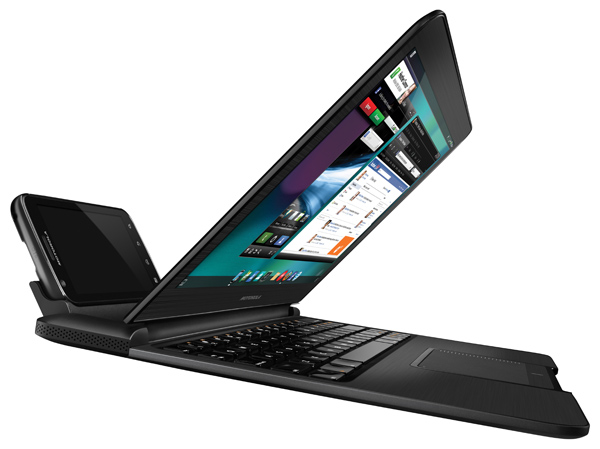
The Motorola Atrix 4G and Laptop Dock was one of our favorite new devices at CES, but the company has priced it so high that it's hard to see anyone shelling out the cash to buy the phone and peripheral.

The Motorola Atrix 4G was one of our favorite devices at CES this year (pics and hands-on impressions here). The Android phone itself is sleek and powerful, but what separates it from the pack is the ability to dock with a laptop shell and become a full netbook, complete with Firefox and some productivity software. Better, the Laptop shell holds an 8 to 10 hour charge, and will actually charge the phone while it powers the dock. But the looming question has always been its price. In order for the Atrix 4G + Laptop Dock concept to make sense, it had to cost less to own than simply buying a phone and netbook separately. Unfortunately, as we feared, Motorola and AT&T have completely blown it. The Atrix 4G will hit shelves on March 6, but the Laptop Dock is too expensive to justify buying.

Assuming you’re looking to own a netbook and a smartphone, which is the market Motorola is targeting, here is what it costs to own a Motorola Atrix 4G and its accompanying Laptop Dock. For the purposes of picking plans that are actually usable, I have avoided AT&Ts 200MB data plans.

The economics don’t make sense

Motorola is charging $500 to buy the Laptop Dock by itself without a plan. How on earth is it worth that much money? Most netbooks AT&T sells max out at $450, and netbooks outside of the carrier cost a lot less than that. Essentially, the Laptop Dock is a screen, a keyboard, and a battery. The device has no CPU, RAM, harddrive, or anything inside of it. This device should not cost more than $200 without a plan. That puts its price about $100 under the price of a standard netbook ($300-$350). Bundled with the Atrix 4G (and contract), it should cost about $300-$350. Bottom line, it should match the price of a netbook.

motorola-atrix-laptop-screen-firefox-ces-2011

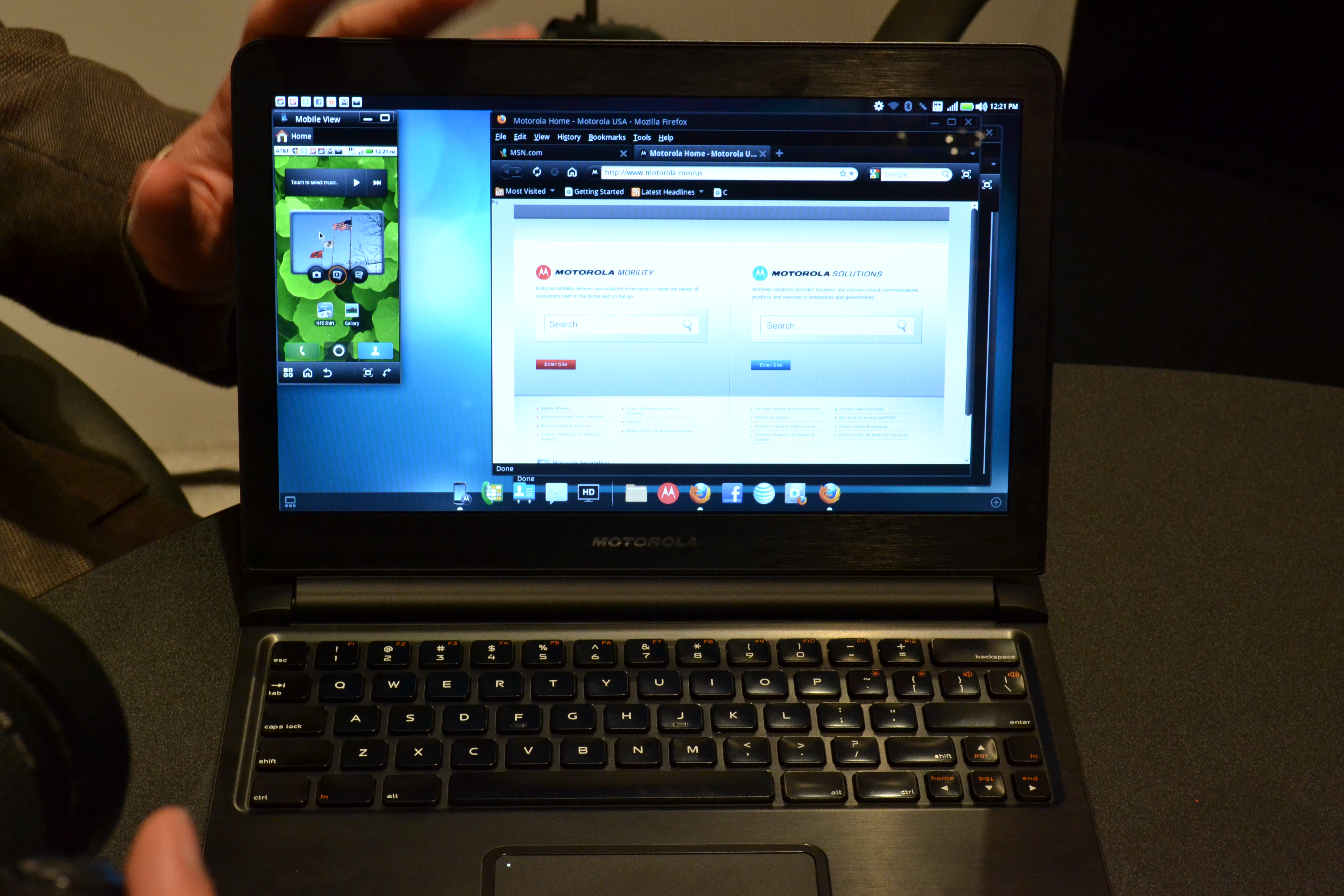
Why can’t it cost more? Well, because it offers a lot less. As novel an idea as the Atrix 4G Laptop mode is, it makes a weak substitute for a full-fledged netbook. It has a Firefox browser, 15-inch screen, and some basic document editing software (very basic), but doesn’t have great stats for a laptop. The gigabyte of RAM and dual-core processor are great, but the 16GB of internal memory, lack of a Webcam, low desktop resolution, and lack of available applications and games leave a lot to be desired. Since it runs a variant of Android/Linux in its Laptop mode, there are few to no applications built for it yet. Motorola will likely release a few, but unless the concept takes off in a major way, browsing the Web on a big screen with a keyboard is the only major advantage of the Atrix 4G Laptop. But at its current pricing, you could buy a decked out netbook and do a helluva lot more with it for much less money.


Conclusion


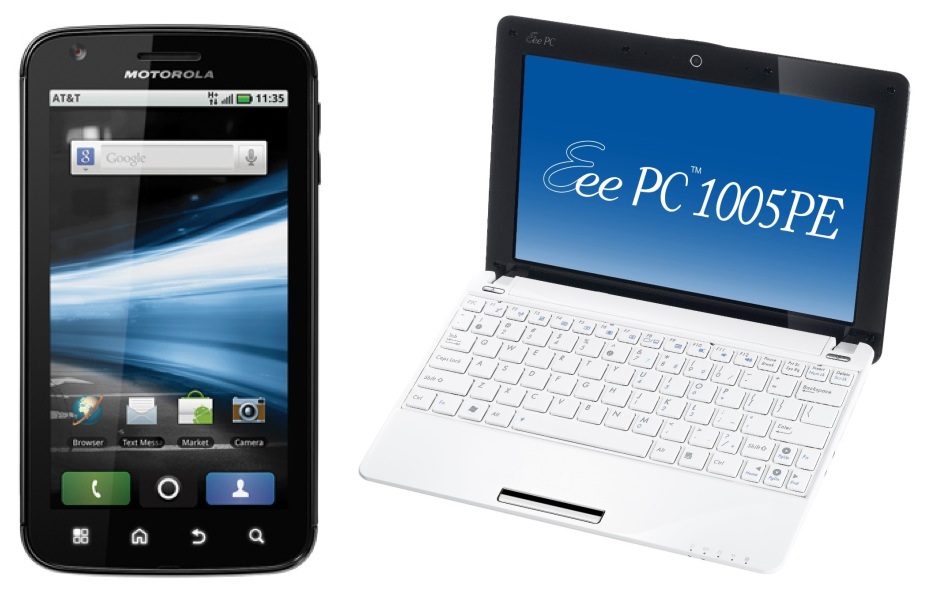
While the Atrix 4G + Laptop Dock is definitely a better deal than buying an Atrix 4G (or other Android phone) and a 3G connected Netbook, I can’t see how anyone who wasn’t rich, lazy, desperate, or a combination of the three would choose either option at AT&T’s current data and device prices. The most economical way to go is to buy a $200 Android smartphone like the Atrix 4G and also buy a Wi-Fi netbook like the ASUS Eee PC Seashell Windows 7 Netbook for $315. With some ingenuity, you can find a way to tether your phone and netbook without AT&T’s crazy tethering plan. Even if you do decide to go legit and opt for the $45-a-month tethering plan, it works out to $1,595, a mere $15 for a fully functioning Windows 7 computer that doesn’t need a phone jammed into it to operate.

motorola-atrix-4g-plus-asus-eee-pc


The Atrix 4G + Laptop is one of the coolest ideas we’ve seen, but the only way such a concept will take off is if it’s either A.) much better than a standard netbook and phone separately, or B.) cheaper than the alternatives. Sadly, The Atrix 4G + Laptop Dock is neither.

Friday, January 7, 2011

Motorola's Latest Smartphone Combo ATRIX of Year


Check out Motorola's latest smartphone, the ATRIX, which packs Tegra 2 and has two separate docking options.

We were very intrigued by the ATRIX 4G when AT&T CEO Ralph de la Vega talked about it during his company’s press conference. Though it’s an impressive phone over all, the part we were most interested in was the laptop dock that essentially turns the phone into a full-blown netbook.

Last night we got a chance to look at that dock (and the phone) a little more closely. The smartphone itself packs Nvidia’s Tegra 2, HSPA+, 1GB of RAM, up to 48GB of memory, fingerprint log-in, a 4-inch QHD display, a front-facing camera for video calls and a 5-megapixel camera with an LED flash on the rear. Software-wise it packs Android 2.2 and a customized version of Linux put in place to help with that laptop transformation we talked about before.

Set for availability in Q1 of this year, this phone, with its dual core processor and unique dock, is nothing short of a beast. A beautiful beast. The laptop docking station features an 11.6-inch screen, full keyboard, stereo speakers, and a 36Wh three-cell battery that delivers up to eight hours of battery life. It also charges the phone while the phone is docked. It weighs just 2.4 pounds and features an ultra slim design. No word on pricing just yet and we didn't get to see the AC adapter for the laptop, so we have no idea what it looks like or how heavy it is. Still, we were told it looks "just like a regular laptop charger."


Motorola also has a second dock for the ATRIX, which is more like an iPod dock. It features three USB ports and HDMI support.


Related Posts Plugin for WordPress, Blogger...
Powered by Blogger.