This is default featured slide 1 title

Go to Blogger edit html and find these sentences.Now replace these sentences with your own descriptions..

This is default featured slide 2 title

Go to Blogger edit html and find these sentences.Now replace these sentences with your own descriptions..

This is default featured slide 3 title

Go to Blogger edit html and find these sentences.Now replace these sentences with your own descriptions..

This is default featured slide 4 title

Go to Blogger edit html and find these sentences.Now replace these sentences with your own descriptions..

This is default featured slide 5 title

Go to Blogger edit html and find these sentences.Now replace these sentences with your own descriptions..

Showing posts with label Intel. Show all posts

Monday, February 6, 2012

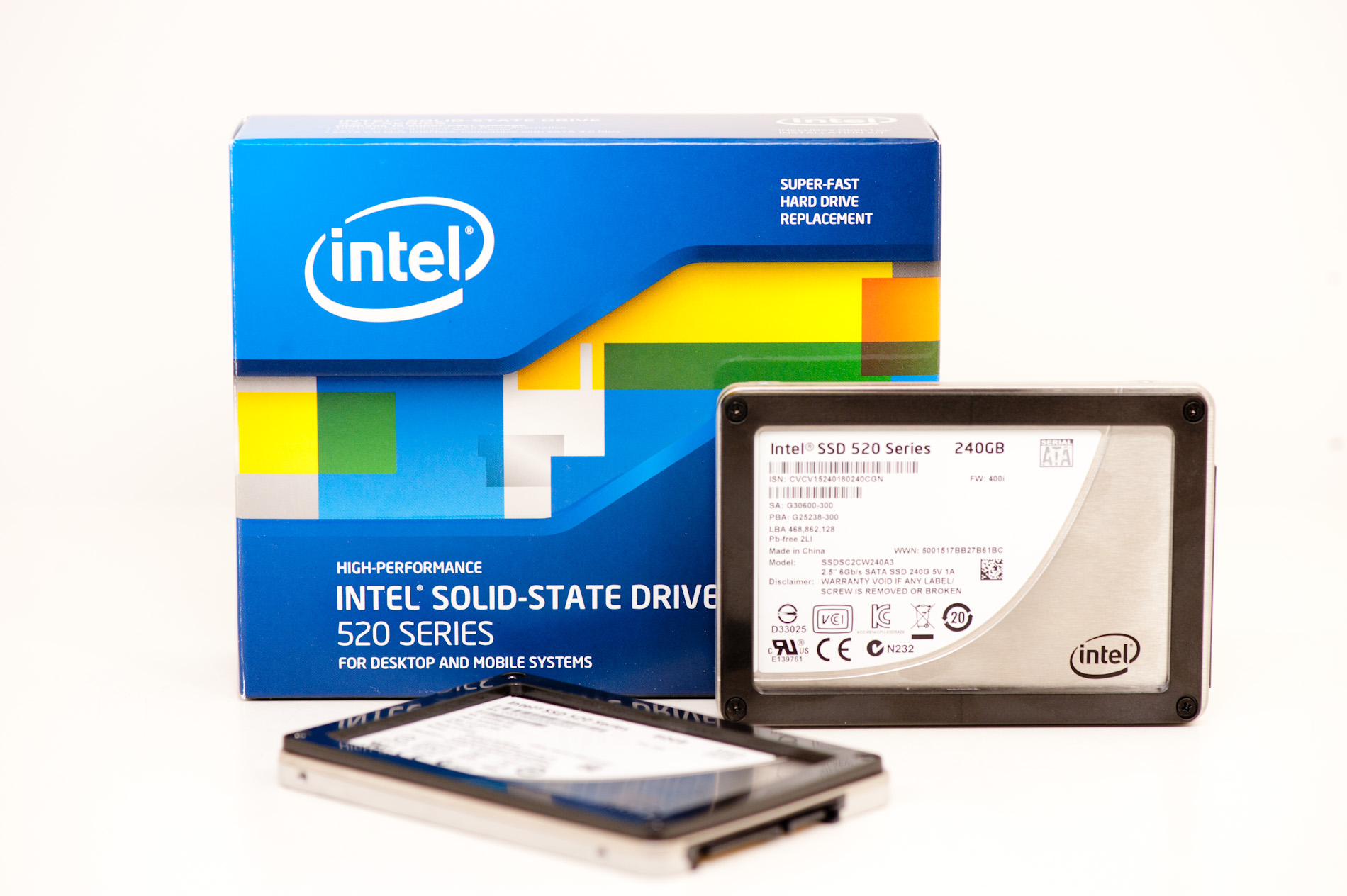
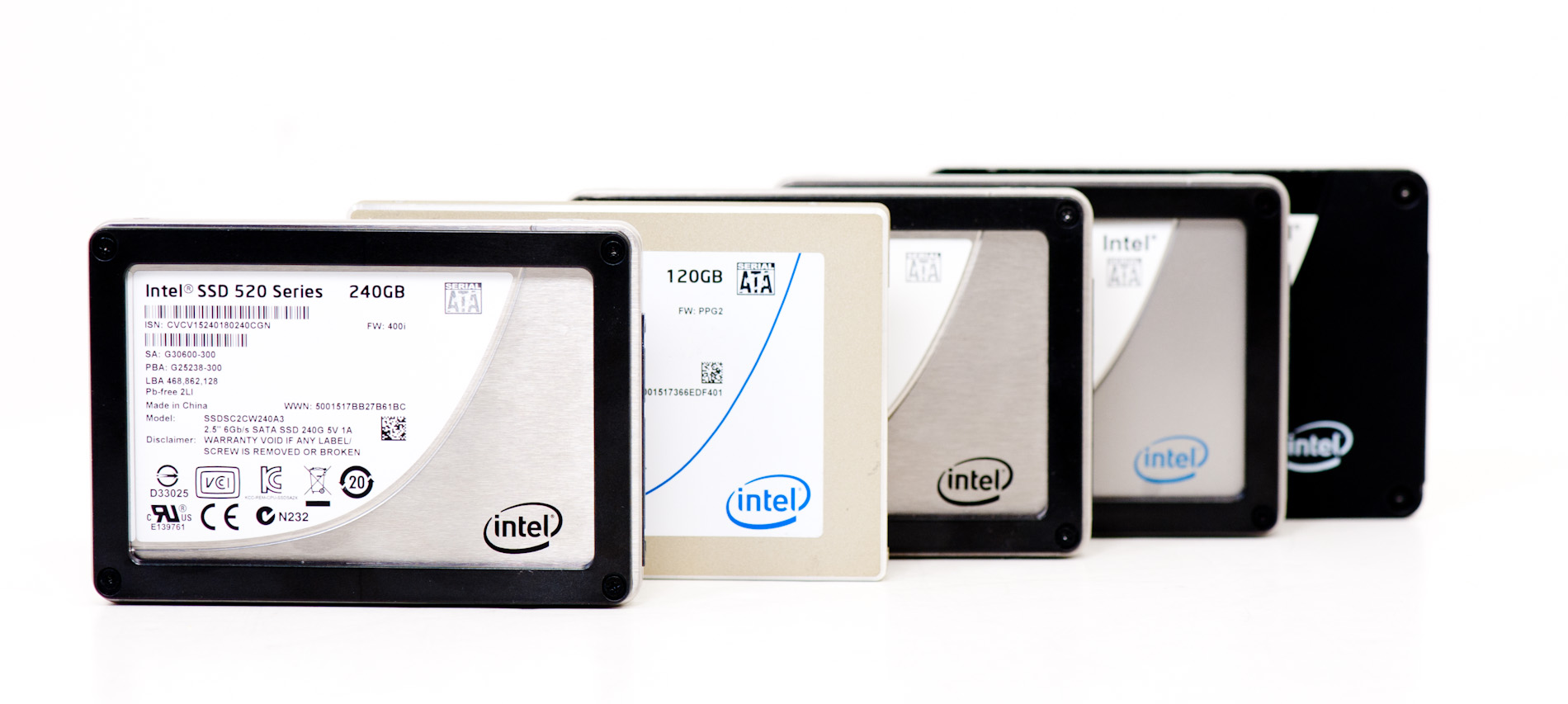
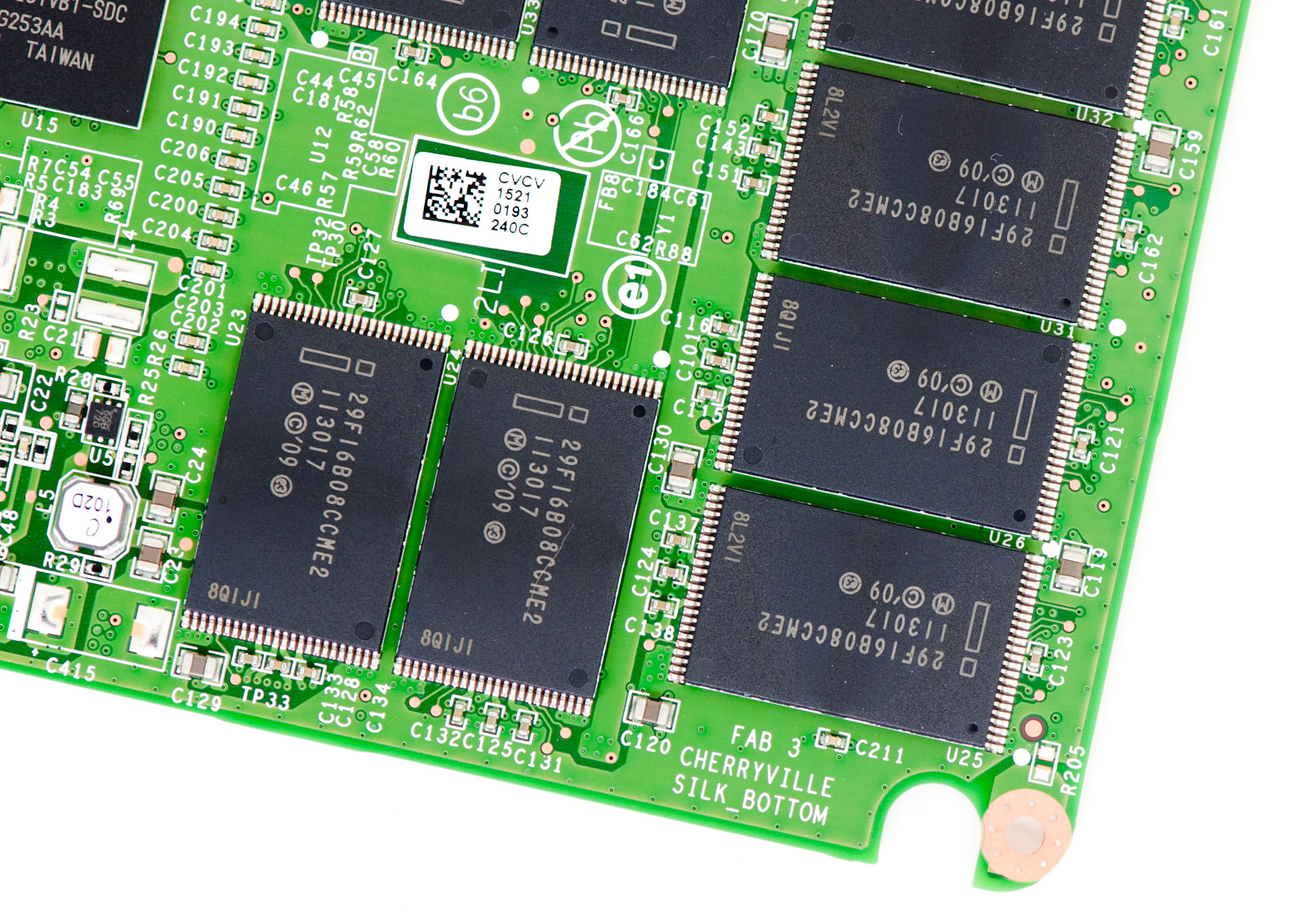
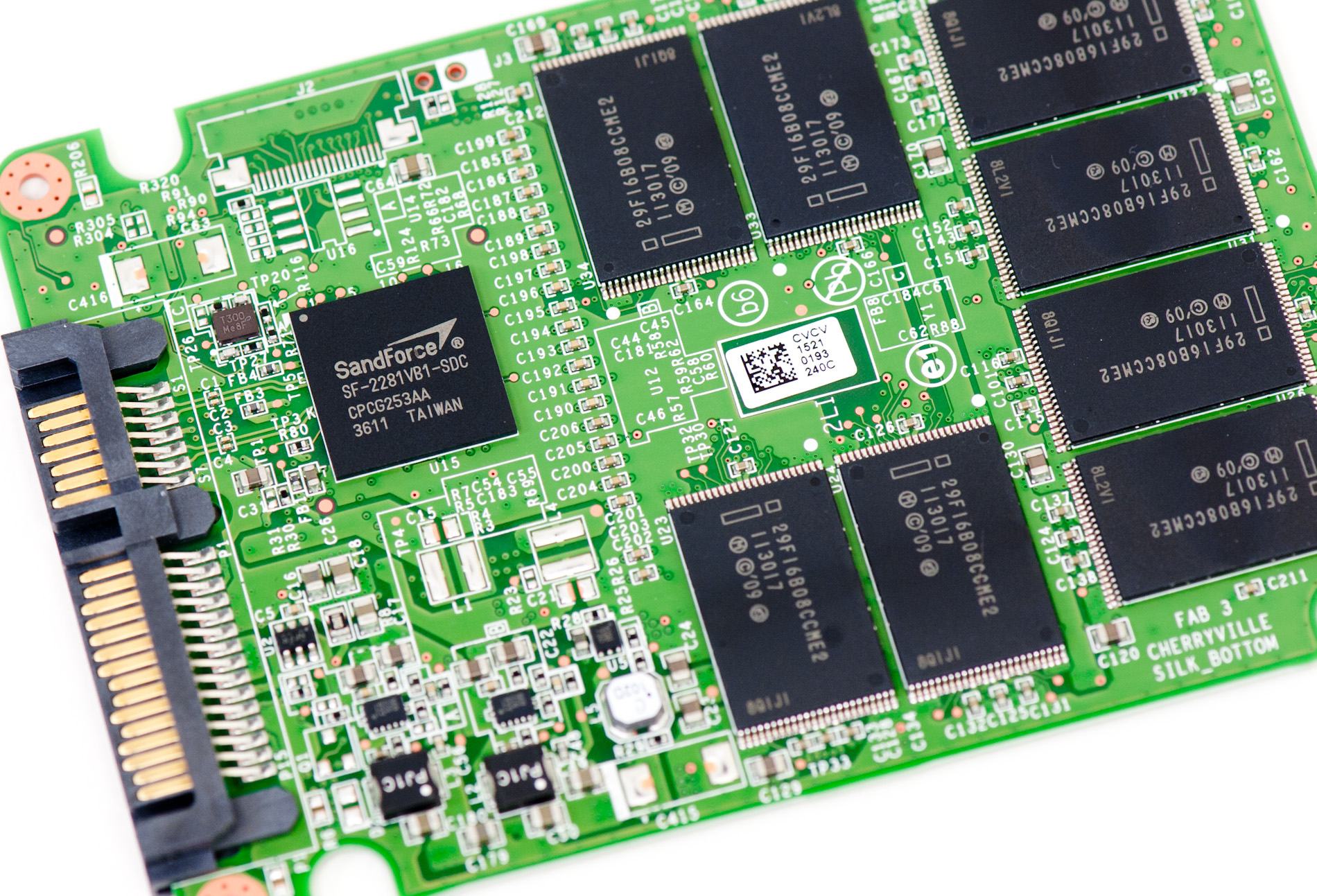
Intel SSD 520 Cherryville Brings Reliability to SandForce

Intel was rumored to be working on a SandForce based drive for several months now, but even the rumors couldn't encapsulate just how long Intel and SF has worked on this drive. According to Intel, the relationship began 1.5 years ago. Still lacking a 6Gbps controller of their own and wanting to remain competitive with the rest of the market, Intel approached SandForce about building a drive based on the (at the time) unreleased SF-2281 controller. Roughly six months later, initial testing and validation began on the drive. That's right, around the time that OCZ was previewing the first Vertex 3 Pro, Intel was just beginning its extensive validation process.

Codenamed Cherryville, Intel's SSD 520 would go through a full year of validation before Intel would sign off on the drive for release. In fact, it was some unresolved issues that cropped up during Intel's validation that pushed Cherryville back from the late 2011 release to today.

Intel's strenuous validation will eventually make SandForce's drives better for everyone, but for now the Cherryville firmware remains exclusive. Intel wouldn't go on record with details of its arrangement with SandForce, but from what I've managed to piece together the Intel Cherryville firmware is exclusive for a limited period of time. That exclusivity agreement likely expires sometime after the SF-2281 is replaced by a 3rd generation controller. There are some loopholes that allow SandForce to port bug fixes to general partner firmware but the specific terms aren't public information. The important takeaway is anything fixed in Intel's firmware isn't necessarily going to be fixed in other SF-2281 based drives in the near term. This is an important distinction because although Cherryville performs very similarly to other SF-2281 drives, it should be more reliable.
As Intel has been working on this firmware for quite a while, it's likely that the 520 uses an older branch of the SF-2281 firmware that has been updated over the past twelve months.

The BSOD is Back, but Not on Intel

Back in October SandForce announced that it had discovered a firmware issue that resulted in unexpected BSODs on SF-2281 drives on certain platforms. Why it took SandForce several months to discover the bug that its customers had been reporting for a while is a separate issue entirely. SandForce quickly pushed out the firmware to OCZ and other partners. Our own internal testing revealed that the updated firmware seemed to have cured the infamous BSOD.
Just as background, our SSD testing is rarely over once the review goes live. Any drive we recommend gets tossed into a primary use machine somewhere within the company. We keep track of drive behavior, including any bugs or performance issues over time. This long term testing process takes place over months. The results of these long term tests are folded into future reviews and recommendations.

The BSOD is caused by a bug in SandForce's power state logic that ultimately results in the drive disconnecting from the system while it's running. It turns out that Windows isn't a fan of you hot un-plugging the drive it's running on, which results in the BSOD. We had two systems that exhibited the BSOD, both of which were fixed by the update last October.


As luck would have it, our own Brian Klug happened to come across an unexpected crash with his 240GB non-Intel SF-2281 based SSD two weeks ago when he migrated it to another machine. The crash was an F4 BSOD, similar in nature to the infamous BSOD issue from last year. While two of the systems we reproduced the BSOD bug on were cured by last year's firmware update, Brian's system (an X58/Core i7 build) was BSODing regularly playing Battlefield 3. Games end up being a great way to trigger the SF-2281 BSOD issue as they frequently switch between periods of idle and load, which does a good job of stressing the power state logic in SandForce's firmware. I immediately sent Brian an Intel SSD 520 to see if the BSOD remained on Intel's drive. Switching to Cherryville caused Brian's BSODs to go away. Indeed most end user reports of SF-2281 BSODs went away with the fixed firmware, but we've still heard of isolated issues that remain unresolved. Whatever Intel has done with the 520's firmware seems to have fixed problems that still remain in the general SF-2281 firmware.

This is actually a dangerous precedent as it means one of two things. The first possibility is that SandForce has been made aware of flaws in its current firmware and chooses against (or is legally prevented from) disclosing it to its partners. The second possibility, and arguably even worse for SandForce, is that Intel was able to identify and fix a bug in the SF-2281 firmware without SandForce knowing it existed or was addressed. I suspect it's the former but as no one is willing to go on the record about the Intel/SandForce agreement I can't be certain.

Intel did go on record saying that the 520 is expected to have far fewer F4/F7 BSODs than any other SF-2281 drive. I asked Intel if I should read into the phrase "far fewer", but the answer was no - the 520 is expected to have similar reliability to the Intel SSD 510 and 320.


At the end of the day that's what Intel really brings to the table with the 520. As you'll soon see, performance isn't very different compared to other SF-2281 based drives. Intel's biggest advantage comes from the unique firmware that ships with the drive. Intel is also quick to point out that while other SF-2281 manufacturers can purchase the same Intel 25nm MLC NAND used on the 520, only Intel's drives get the absolute highest quality bins and only Intel knows how best to manage/interact with the NAND on a firmware level. While it's nearly impossible to prove most of this, the fact that we're still able to reproduce a BSOD on the latest publicly available SF-2281 firmware but not on the SF-2281 based Intel SSD 520 does say a lot about what you're paying for with this drive.

And you are paying a premium for the 520 compared to other SF-2281 based SSDs on the market today:
Intel SSD 520 Price Comparison
  60GB 120GB 180GB 240GB 480GB
Intel SSD 520 (SF-2281) $149 $229 $369 $509 $999
Kingston HyperX (SF-2281) N/A $205 N/A $420 N/A
OCZ Vertex 3 (SF-2281) $95 $190 $240 $375 $850
Samsung SSD 830 $110 $220 N/A $360 $800

Last year Intel hinted at a move from the consumer market to enterprise server and client markets. The 520's higher price likely won't matter there, but for consumers the higher price is noticeable - particularly with good options from companies like Samsung now available on the market.

Friday, November 18, 2011

Intel Manufactured Board Siler DX79SI Review as X79

Reviews of Intel manufactured boards are something of a rarity.  They are not marketed in the same way other motherboards are – almost not at all in comparison.  It could be argued that reviews are only seen coming at the start of a chipset release, coinciding with what we as reviewers get in our media kits from Intel itself.  However, to an enthusiast, it is strange to say that they sell well – consumers or system builders wanting to pair a processor with a board without hassle can go straight in at an Intel motherboard/processor combo. 


The question is with an enthusiast platform such as X79, would you really want to deal with an Intel board?
Internally, I have to question how big Intel’s consumer motherboard design team is.  We know their processor and chipset design groups must be comparatively huge to pump out all the products we see on our shelves.  But to produce only one or two consumer motherboards with each chipset, it comes into question whether an Intel board would contain all the features, updates (cf. BIOS later), performance and competitiveness when compared to products from third party vendors, for which motherboards are their main business.  Our last reviews of P55 and H57 show that Intel usually plays it safe – having a working product on their end is more important than bells and whistles.  However in a market where a ‘working product’ should be the de facto standard, Intel invariably has tough competition.

Overview

The DX79SI ‘Siler’ motherboard from Intel is a hard one to summarize.  If I were being lazy, I could merely say ‘it works’, however there is more to that than meets the eye.  In some areas, it gives more than standard – e.g. dual gigabit Ethernet.  But with one hand it gives and the other it takes away, with no option for teaming.
Users of Intel boards of past will notice the continuing ‘skull’ theme in a blue/black miasma of components and connectors, which unlike previous iterations do not light up.  The board sports the bare minimum from the SATA connectors, as well as a lack of thought to the PCIe layout for anyone using more than one GPU.  The PCIe are only rated for Gen 2, which isn’t surprising – other vendors sporting Gen 3 compatibility are outside X79 specifications for now.

The BIOS itself is simple and functional; however do not expect anything spectacular.  While ASUS, Gigabyte, MSI and the test have teams of designers for graphical interfaces, Intel does get left behind in its application of a basic system still.  It is not always clear what is a menu and what is not, however one thing I do like is that the text turns yellow when you change it, making it easy to see what default is.  This makes looking at the Auto OC options a lot easier.  The ‘Back2BIOS’ switch on the IO panel is a feature I hope other vendors adopt as well.

Performance is nothing to shout about, and the Intel software is, while visually quite easy to navigate, ultimately limiting.  There are no ‘easy’ menus, requiring the user to know the ins and outs of a motherboard in order to use it.  No OS fan controls either – those are strictly in the BIOS.  If the media sample I received for this review is indicative of a retail package, while the mouse mat addition is slightly amusing, there are no SATA cables, but an SLI connector and a Bluetooth/wifi module included.
The Intel DX79SI ‘Siler’ motherboard is expected to retail for approximately $290-$300 and comes with a 3-year limited warranty.

Visual Inspection

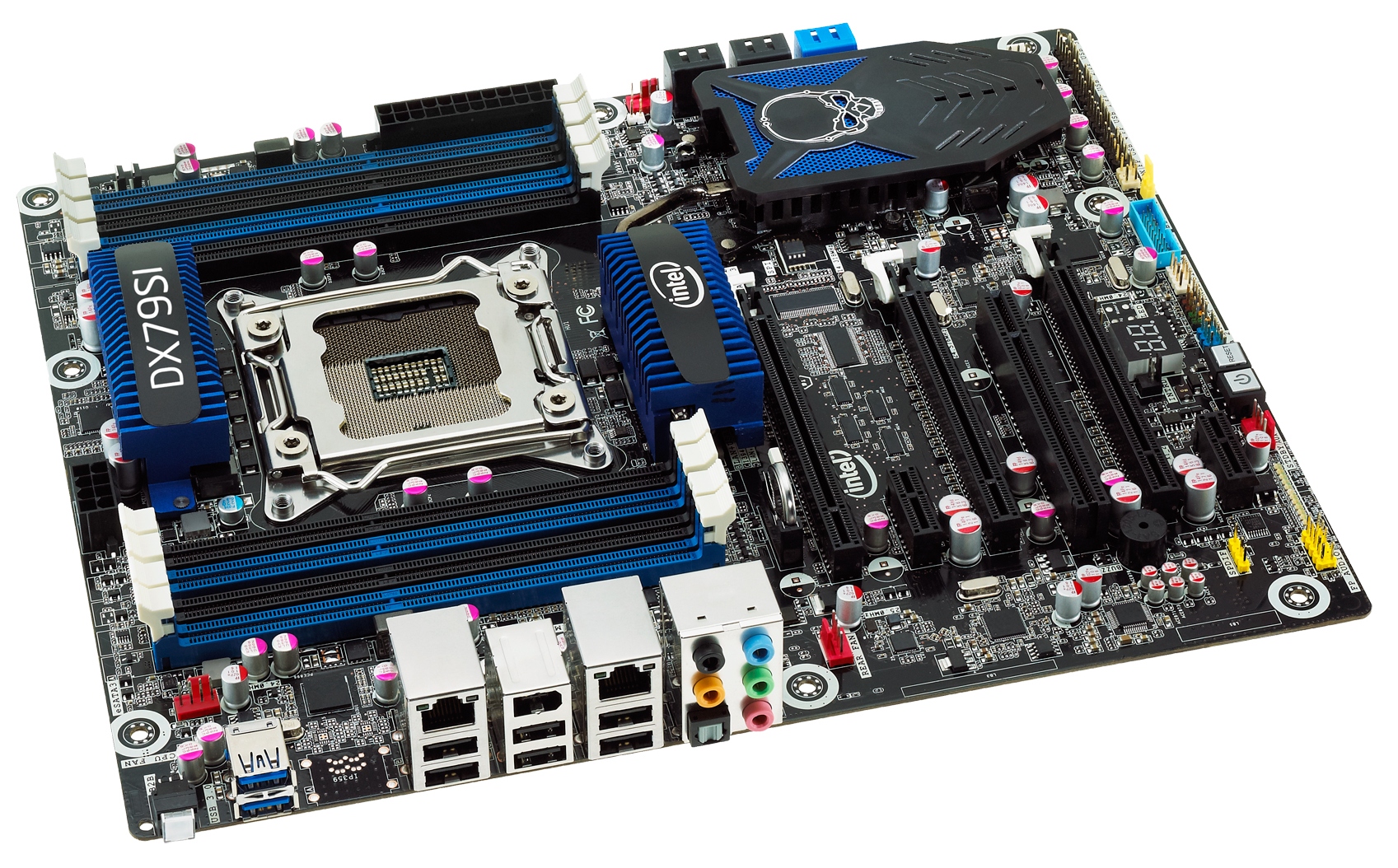
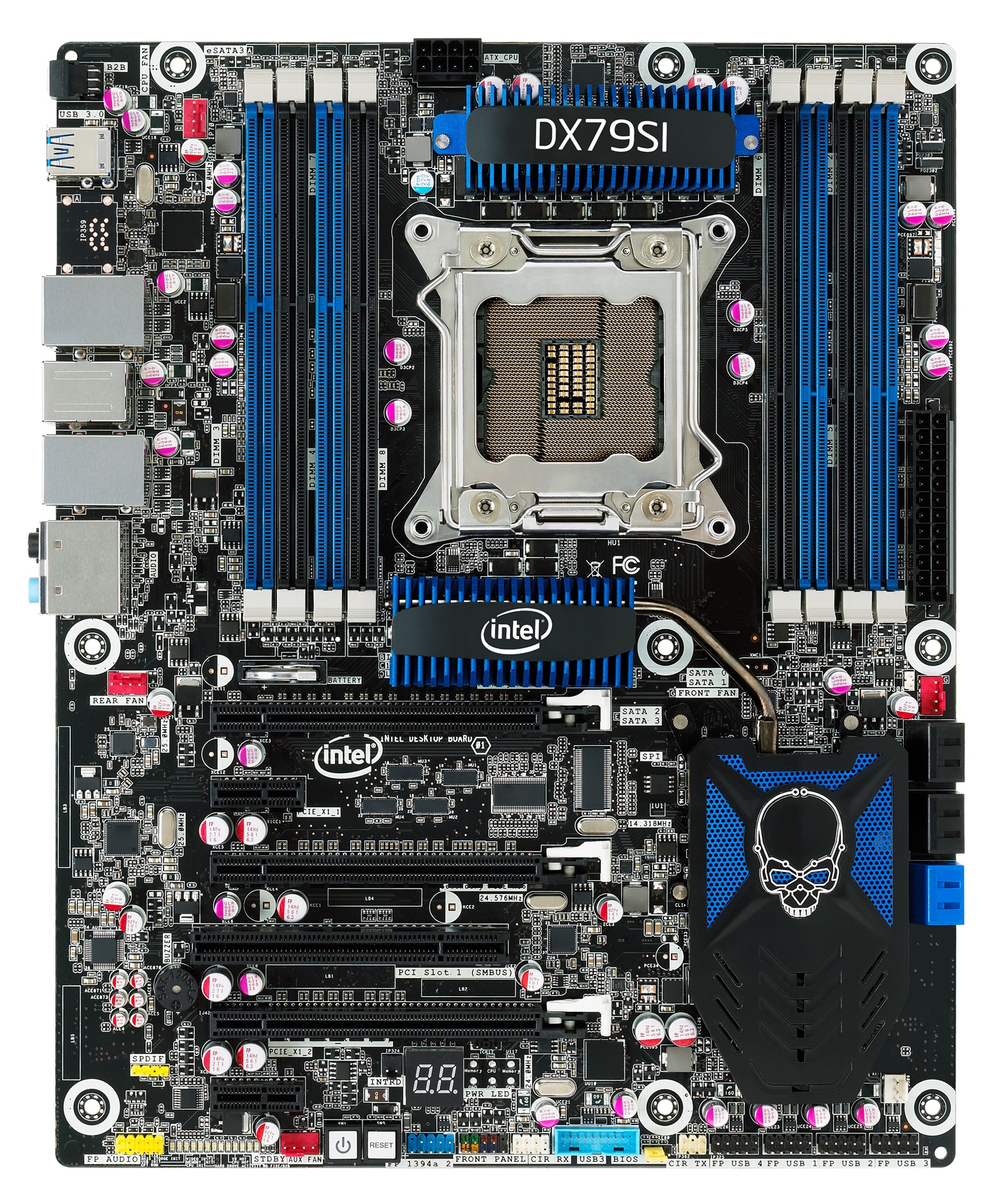
If we ignore the skull heatsink for a second, the Intel board actually looks fairly busy on the PCB, with almost every nook and cranny filled with a trace to some component or another.  As with all X79 products, the area consumed by the socket and memory (in this case, 8 DIMMS, 2 per channel) is just under half the board in itself.  The power delivery heatsink at the top is by itself and very simple, possibly leading to overclocking issues or throttling later on.

The main CPU fan header is at a slightly odd place, to the left of the DIMMs.  This requires the fan cable to go over the memory (hopefully your fan cable will be long enough), which could be an issue if a user decides to actively cool their memory.  The red fan headers on board actually almost follow four points of a compass, with a rear fan header by the IO, a front header by the SATA ports, and an auxiliary fan header next to the power/reset switches.

The PCH is covered by that low profile passive ‘skull’ design, which actually hides a relatively small heatsink underneath, hence the connection via heatpipe to a proper air cooled fin arrangement in the middle of the board.  To the right of this skull design are the SATA ports, all from the PCH, so two SATA 6 Gbps (blue) and four SATA 3 Gbps (black).  Users will note that there are no extra SATA controllers on board, so there are no extra SATA ports or eSATA.

Next to the power/reset buttons is a series of LEDs, indicating what part of the POST process is working.  This works in conjunction with the 2-digit debug LED also on board.  I can much use for this in case errors arrive, however there are no options in the BIOS to turn these lights off.  Depending on the case used (varying from bland to windowed) to house the system, these lights could provide an unwelcome aesthetic effect.

One of my main criticisms with the motherboard is the PCIe layout.  In order, we have a PCIe x16, x1, x16, PCI, x16 (limited to x8), x1.  The issue lies in double-width dual GPU setups, whereby the GPUs have to be placed into the x16 slots by order.  This leaves no gap between the GPUs for happy airflow – during my dual GTX580 tests on an open bench test bed, I was surprised and worried about the heat generation, which would only freak me out if it were in a case.  A lot of motherboard manufacturers in X79 should be placing the first and second PCIe slots at least an extra PCIe width apart, allowing for sufficient airflow, however Intel have gone for the ‘it works’ route here.

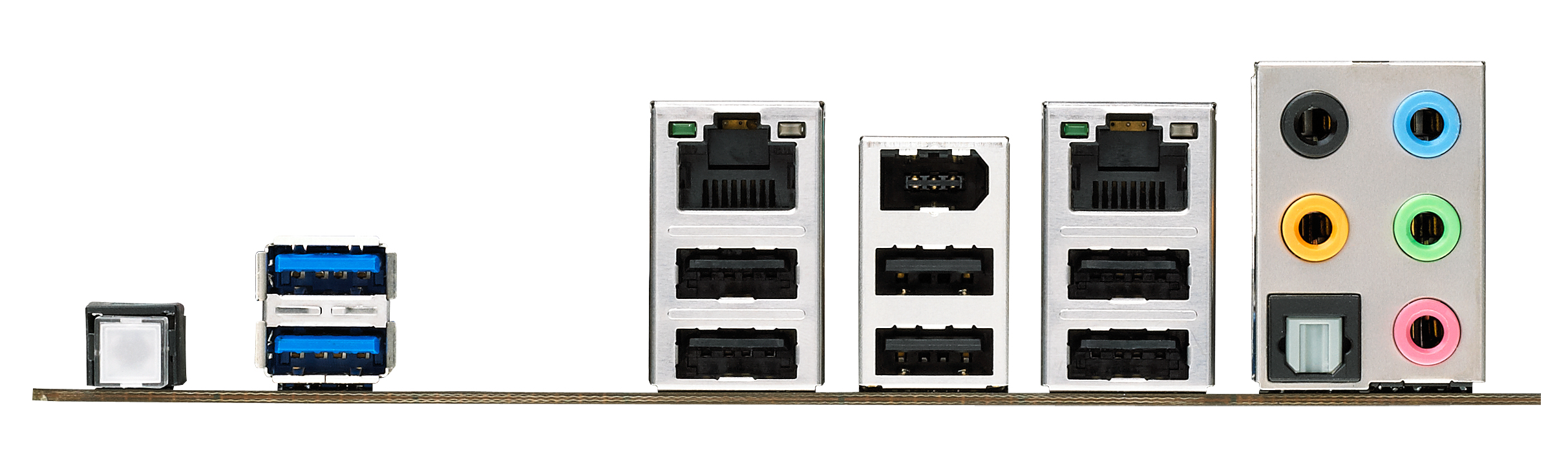
At various levels, the IO panel is a little disappointing.  It’s very basic, showcasing two USB 3.0, six USB 2.0, dual gigabit Ethernet (Intel NICs of course), Firewire, optical S/PDIF output and audio jacks.  The plus point here is the Back2BIOS button on the left, which when in ‘on’ mode, glows red and always boots into the BIOS.  Another click and the system will boot normally.  This would be handy for certain boards that connect the USB late in the POST sequence, making it a hassle to use the keyboard to enter the BIOS.

There is a big gap in the I/O, suggesting that Intel have skimped on perhaps some more USB 3.0 or eSATA to plug the gap.

Friday, August 26, 2011

The Sandy Bridge Pentium Review: G850, G840, G620 & G620T Tested

In 2006 Intel introduced its tick-tock cadence for microprocessor releases. Every year would see the release of a new family of microprocessors as either a tick or a tock. Ticks would keep architectures relatively unchanged and focus on transitions to smaller manufacturing technologies, while tocks would keep fab process the same and revamp architecture. Sandy Bridge was the most recent tock, and arguably the biggest one since Intel started down this road.


At a high level the Sandy Bridge CPU architecture looked unchanged from prior iterations. Intel still put forth a 4-issue machine with a similar number of execution resources to prior designs. Looking a bit closer revealed that Intel completely redesigned the out-of-order execution engine in Sandy Bridge, while heavily modifying its front end. Sandy Bridge also introduced Intel's high performance ring bus, allowing access to L3 by all of the cores as well as Intel's new on-die GPU.

The Sandy Bridge GPU was particularly surprising. While it pales in comparison to the performance of the GPU in AMD's Llano, it does represent the first substantial effort by Intel in the GPU space. Alongside the integrated GPU was Intel's first hardware video transcoding engine: Quick Sync. In our initial review we found that Quick Sync was the best way to quickly transcode videos, beating out both AMD and NVIDIA GPU based implementations in our tests. Quick Sync adoption has been limited at best, which is unfortunate given how well the feature performed in our tests.

Sandy Bridge wasn't all rosy however. It was the first architecture that Intel shipped with overclocking disabled on certain parts. Any CPU without Turbo Boost enabled is effectively unoverclockable. Intel killed the low end overclocking market with Sandy Bridge.


The overclocking limits were a shame as Sandy Bridge spanned a wide range of price points. The low end Core i3-2100 was listed at $117 while the highest end Core i7-2600K came in at $317. While you can't claim that Sandy Bridge was overpriced at the high end, there's always room for improvement.

Despite abandoning Pentium as a high end brand with the 2006 release of Intel's Core 2 Duo, Intel has kept the label around for use on its value mainstream parts. Last year we saw only two Pentium branded Clarkdale parts: the G6950 and G6960. This year, powered by Sandy Bridge, the Pentium brand is a bit more active.

Processor Core Clock Cores / Threads L3 Cache Max Turbo Max Overclock Multiplier TDP Price
Intel Core i7 2600K 3.4GHz 4 / 8 8MB 3.8GHz 57x 95W $317
Intel Core i7 2600 3.4GHz 4 / 8 8MB 3.8GHz 42x 95W $294
Intel Core i5 2500K 3.3GHz 4 / 4 6MB 3.7GHz 57x 95W $216
Intel Core i5 2500 3.3GHz 4 / 4 6MB 3.7GHz 41x 95W $205
Intel Core i5 2400 3.1GHz 4 / 4 6MB 3.4GHz 38x 95W $184
Intel Core i5 2300 2.8GHz 4 / 4 6MB 3.1GHz 34x 95W $177
Intel Core i3 2120 3.3GHz 2 / 4 3MB N/A N/A 65W $138
Intel Core i3 2100 2.93GHz 2 / 4 3MB N/A N/A 65W $117
Intel Pentium G850 2.9GHz 2 / 2 3MB N/A N/A 65W $86
Intel Pentium G840 2.8GHz 2 / 2 3MB N/A N/A 65W $75
Intel Pentium G620 2.6GHz 2 / 2 3MB N/A N/A 65W $64
Intel Pentium G620T 2.2GHz 2 / 2 3MB N/A N/A 35W $70

The new Sandy Bridge based Pentiums fall into two lines at present: the G800 and G600. All SNB Pentiums have two cores (HT disabled) with 256KB L2 per core and a 3MB L3 cache. CPU core turbo is disabled across the entire Pentium line. From a performance standpoint, other than missing hyper threading and lower clocks - the Sandy Bridge Pentiums are very similar to Intel's Core i3.

Intel continues to separate the low end from the high end by limiting supported instructions. None of the Pentiums support AES-NI or VT-d. Other than higher clock speeds the 800 series only adds official DDR3-1333 support. The 600 series only officially supports up to DDR3-1066.

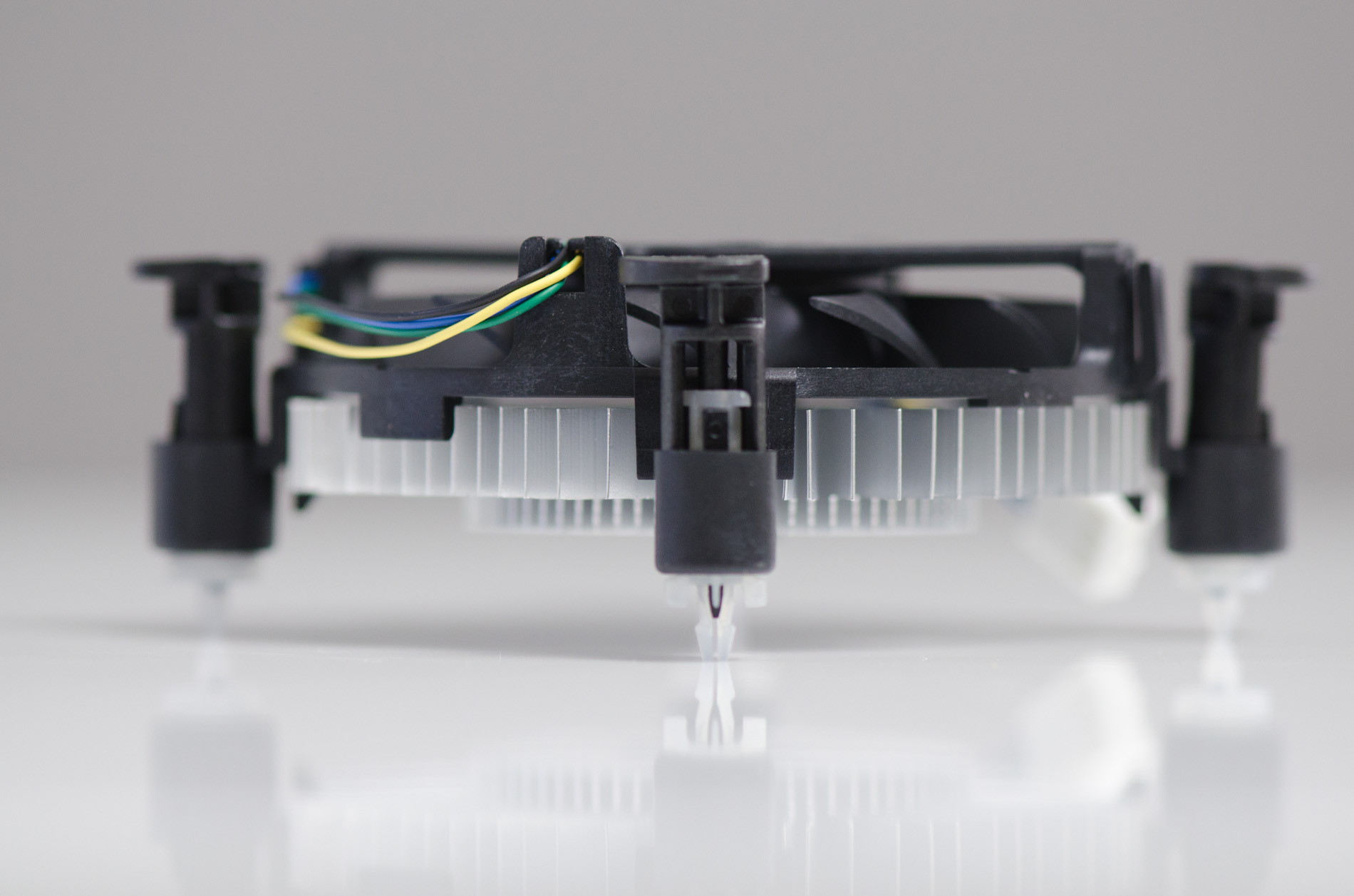
All standard Pentiums carry a 65W TDP. The Pentium G620T runs at a meager 2.2GHz and manages a 35W TDP. Regardless of thermal rating, the boxed SNB Pentiums come with an ultra low profile cooler:


These Pentium CPUs work in the same 6-series LGA-1155 motherboards as their Core i3/5/7 counterparts. The same rules apply here as well. If you want video out from the on-die GPU you need either an H-series or a Z-series chipset.

The Pentium GPU

When Intel moved its integrated graphics on-package with Clarkdale it dropped the GMA moniker and started calling it HD Graphics. When it introduced the Sandy Bridge Core i3/5/7, Intel added the 2000 and 3000 suffixes to the HD Graphics brand. With the Sandy Bridge Pentium, Intel has gone back to calling its on-die GPU "HD Graphics".
Despite the name, the Pentium's HD Graphics has nothing in common with Clarkdale's GPU. The GPU is still on-die and it features the same architecture as Intel's HD Graphics 2000 (6 EUs). Performance should be pretty similar as it even shares the same clock speeds as the HD 2000 (850MHz base, 1.1GHz turbo for most models). I ran a quick test to confirm that what Intel is selling as HD Graphics is really no different than the HD Graphics 2000 in 3D performance:

Intel HD vs 2000 vs 3000 - Crysis Warhead

All is well in the world.

Where the vanilla HD Graphics loses is in video features: Quick Sync, InTru 3D (Blu-ray 3D), Intel Insider (DRM support for web streaming of high bitrate HD video) and Clear Video HD (GPU accelerated post processing) are all gone. Thankfully you do still get hardware H.264 video acceleration and fully audio bitstreaming support (including TrueHD/DTS-HD MA).

Missing Quick Sync is a major blow, although as I mentioned earlier I'm very disappointed in the poor support for the feature outside of the initial launch applications. The rest of the features vary in importance. To someone building a basic HTPC, a Sandy Bridge Pentium will do just fine. Personally I never play anything in 3D, never use the Clear Video HD features and never use Intel Insider so I wouldn't notice the difference between a Sandy Bridge Pentium and a Core i5 for video playback.

Saturday, January 22, 2011

You Need to Know About Intel Sandy Bridge

In line with its tick-tock strategy, Intel's latest Sandy Bridge platform (launched at CES 2011) is a major architectural change which promises significant performance improvements. During the official launch in Singapore today, the company demonstrated just how fast the new chipset is by pitting it against an machine sporting the previous-generation Core i7 processor with a similar configuration. While the latter took over 3 minutes to transcode a HD video, the new PC was able to complete the task in a mere 14 seconds.

But is raw power enough reason to dump your old machine and buy a Sandy Bridge PC now? We answer five most frequently asked questions to help you in your decision.

Can I play games on a Sandy Bridge integrated graphics engine?

In the past, Intel integrated graphics (IGP) focused on offering power efficiency over performance. While the previous generation IGP allowed for high-definition video decoding, it offered barely playable frame rates for 3D gaming even on the lowest settings.

Not so for Sandy Bridge IGP. Despite not sporting a discrete graphics card, a Sandy Bridge laptop was able to play the first person shooter title, Call of Duty: Modern Warfare 2, on medium settings with acceptable frame rates. This is great news for MMORPG (massively multiplayer online role-playing game) fans, as power-hungry discrete graphics are no longer a requirement for online raiding.

Will we see Sandy Bridge Netbooks or slate tablets?

It is unlikely to see widespread adoption in this category as Sandy Bridge was designed for laptops and desktops due to its higher thermal design power (though Acer is reportedly work on one). This means it requires better heat dissipation, which can take a toll on battery life. Smaller machine such as slates and minilaptops such as the Samsung Sliding PC 7 will go with the Intel Oak Trail platform which has a lower operating temperature and higher power efficiency.

When should I upgrade my current machine?

The huge performance boost for multimedia transcoding and photo editing makes this a must-have upgrade for film makers and photographers, drastically shortening the time needed to complete essential tasks.

But if you are already using a previous-generation machine with high-end graphics card for gaming, your current PC is still relevant and upgrading is optional. Same with users who only surf the Internet or perform Microsoft Office-related tasks, as the increase in raw power of the new platform is unlikely to be missed.

When will Macs get onto the Sandy Bridge platform?

While Apple does not comment on future products, we can expect the first roll-out of Sandy Bridge-powered Macs to appear in the next few months. This is even more exciting for those eyeing the 13.3-inch MacBooks, which are still based on the older Core 2 Duo processor with Nvidia integrated graphics. The improvement of Intel's IGP may be the push needed for Apple to finally adopt the Core i chipset in its 13.3-inch MacBook Pro or even the MacBook Air lineup.

How do I tell the difference between older Core i machines and new Sandy Bridge PCs?

The older generation Core i desktop and laptop processors sport a three-digit code followed by a suffix (i.e. 520UM), while the Sandy Bridge CPUs use four digits with a suffix (i.e. 2820QM). However, the easiest way to determine whether a desktop or notebook uses the latest Intel technology is to look at the logo as shown below).


Previous-generation Core i sticker.


Related Posts Plugin for WordPress, Blogger...
Powered by Blogger.